
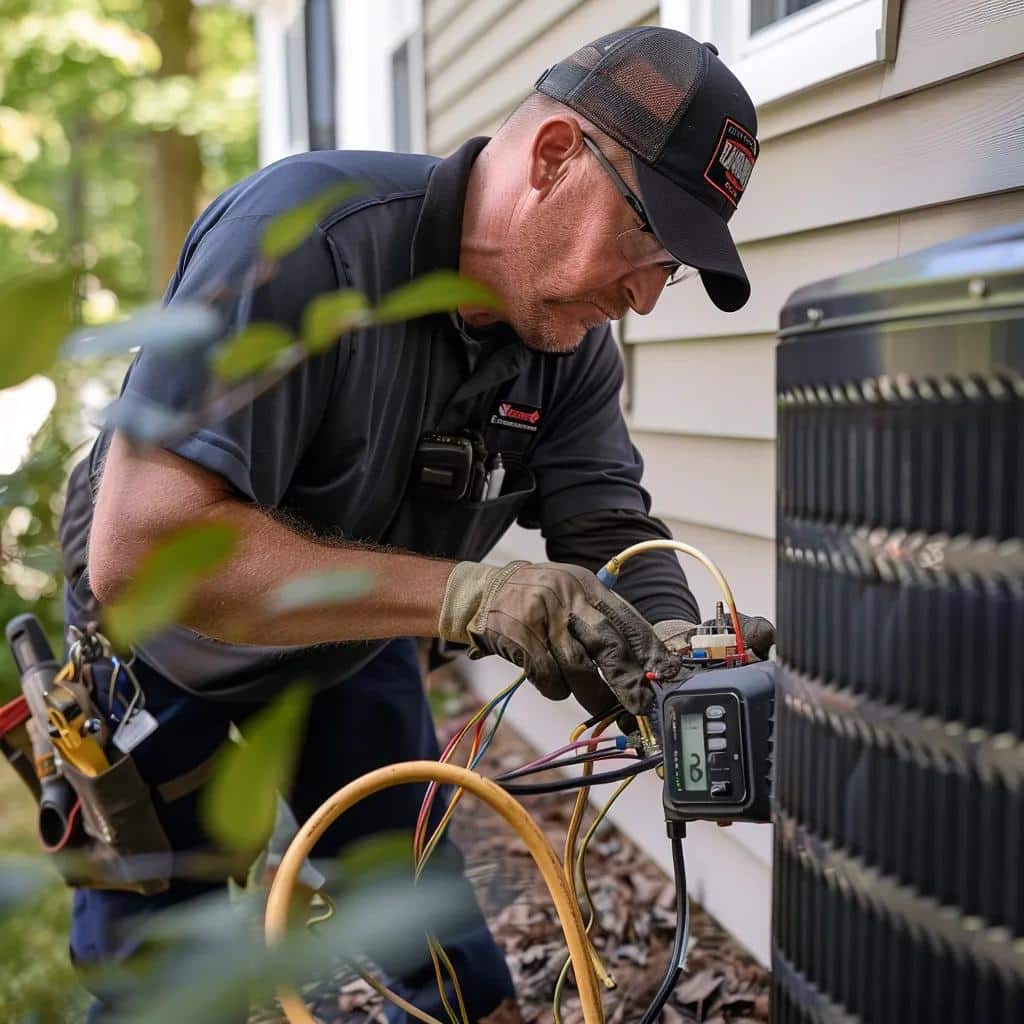
Your Guide to Heat Pump Installation in Framingham
Thinking about a heat pump for your Framingham home? It’s a smart move for comfort and savings! This guide breaks down the process, from choosing the right system to understanding those valuable Mass Save rebates. We’ll cover everything you need to know, making it simple and clear.
The 5 Key Steps to a Smooth Heat Pump Installation
Getting a heat pump installed is a straightforward process when you know what to expect. We’ve outlined the essential steps to ensure your new system works perfectly for your home.
- Home Assessment & Sizing: Figuring out the best fit for your house.
- Permits & Approvals: Making sure everything is up to code.
- Electrical Check & Upgrades: Ensuring your home’s power is ready.
- System Installation: Putting the indoor and outdoor units in place.
- Final Checks & Handover: Testing and planning for the future.
Each step is important for a safe, efficient, and long-lasting heat pump system. Let’s dive into each one!
Step 1: Finding the Perfect Fit for Your Home
To make sure your heat pump keeps you perfectly comfortable year-round, we need to determine its right size. This involves a professional assessment, often called a Manual J calculation. We look at your home’s square footage, how well it’s insulated, the direction your windows face, and Framingham’s climate. Getting the size just right means your heat pump won’t work too hard or too little, saving you money on energy bills and making the system last longer.
Step 2: Navigating Framingham’s Permits
Like any home improvement project, heat pump installations need local approval. Framingham requires building and electrical permits to ensure everything meets safety standards and local rules. We’ll help you submit the necessary paperwork, including system details and site plans, to the Building Department. This ensures your project is compliant and avoids any unexpected delays.
Step 3: Powering Up Your Heat Pump: Electrical Upgrades
Heat pumps need a reliable electrical supply. This often means upgrading your home’s electrical panel and wiring to handle the system’s power needs safely and efficiently. Think of it like giving your home a stronger electrical “heart.”
Why Electrical Upgrades Matter for You:
- Safety First: Proper wiring and breakers prevent overloads and ensure safe operation, protecting your home and family.
- Peak Performance: A robust electrical system allows your heat pump to run at its best, providing consistent comfort.
- Future-Proofing: Upgrading your panel can accommodate future electrical needs, like adding more appliances or electric vehicle charging.
We’ll assess your current electrical system, which might be 100 amps or more, and make sure it’s ready. This often involves adding dedicated 240-volt circuits and ensuring the correct breaker size, all in line with the National Electrical Code (NEC). This attention to detail, especially by experts like Motha Electric, guarantees your system is installed correctly and safely.
National Electrical Code (2023)
Following these codes is essential for the safe and efficient operation of your new heat pump.
Step 4: The Installation Itself
Once the planning and electrical work are done, the physical installation begins. Our technicians will carefully install the outdoor unit (the condenser) and the indoor unit (the air handler). We’ll connect the refrigerant lines and condensate drain, and hook everything up to your upgraded electrical system. After charging the system with refrigerant and setting up the controls, we’ll run tests to make sure everything is working perfectly and safely.
Timeline: For most air-source heat pumps, installation typically takes 1 to 5 days. Ground-source (geothermal) systems can take a bit longer, usually 1 to 2 weeks, due to the underground loop installation.
Choosing the Right Heat Pump for Framingham
There are several types of heat pumps, each with its own advantages. We’ll help you pick the best one based on your home, budget, and efficiency goals.
| Heat Pump Type | Key Features & Benefits |
|---|---|
| Air Source Heat Pump | Efficiency: Very efficient, often providing 300% of the energy it consumes for heating. How it works: Extracts heat from the outside air, even when it’s cold. |
| Ground Source (Geothermal) Heat Pump | Operating Range: Highly consistent performance, even in very cold weather (down to -10°F). Efficiency: Extremely efficient, often 400-500% energy efficiency. How it works: Uses the stable temperature of the earth to exchange heat. |
| Ductless Mini-Split | Installation: No need for existing ductwork. Comfort: Allows for individual temperature control in different rooms. |
| Hybrid Heat Pump | Backup: Works alongside your existing furnace (gas or electric) for maximum efficiency and comfort in all conditions. |
We’ll discuss which option best suits your Framingham home’s needs and your budget.
Unlock Savings with Mass Save Rebates & Incentives
Massachusetts offers fantastic programs to help make heat pumps more affordable! Mass Save provides significant financial incentives that can greatly reduce your upfront costs.
- Air Source Rebates: Up to $10,000 back for qualifying installations.
- Ground Source Rebates: Up to $15,000 back for geothermal systems.
- HEAT Loan: Zero-interest loans up to $50,000 to cover installation costs.
Plus, you can often combine these with federal tax credits!
Federal Tax Credits: An Extra Boost
The Inflation Reduction Act offers a federal tax credit of up to $2,000 for qualified heat pump systems. This means even more savings for your project!
Mass Save (2024)
These programs are designed to help Massachusetts residents transition to cleaner, more efficient heating and cooling.
Understanding Installation Costs and Timelines
The total cost and time for your heat pump installation depend on a few factors:
- System Type: Air source vs. ground source.
- Home Size & Complexity: Larger homes or challenging sites may take longer.
- Electrical Upgrades Needed: The extent of panel and wiring work.
- Equipment Capacity: The size (BTU/ton) of the heat pump.
Estimated Costs (Before Incentives):
- Air Source Systems: Typically $5,000 – $12,000
- Geothermal Systems: Typically $20,000 – $35,000
Remember, these costs are significantly reduced by the Mass Save rebates and federal tax credits we mentioned!
Your Trusted Local Partner for Heat Pump Installation
Installing a heat pump is a significant upgrade for your home’s comfort and efficiency. By understanding the process—from the initial assessment and permits to electrical upgrades and final setup—you can feel confident in your decision.
Working with experienced professionals like Motha Electric ensures that your electrical system is up to code and perfectly matched to your new heat pump. This attention to detail guarantees safe, reliable, and efficient operation for years to come.
Schedule Your Consultation Today!
Ready to Experience Ultimate Comfort and Savings?
Let us help you find the perfect heat pump solution for your Framingham home. We’ll guide you through every step, from assessment to installation and rebate applications.